Interactive Fan Challenges
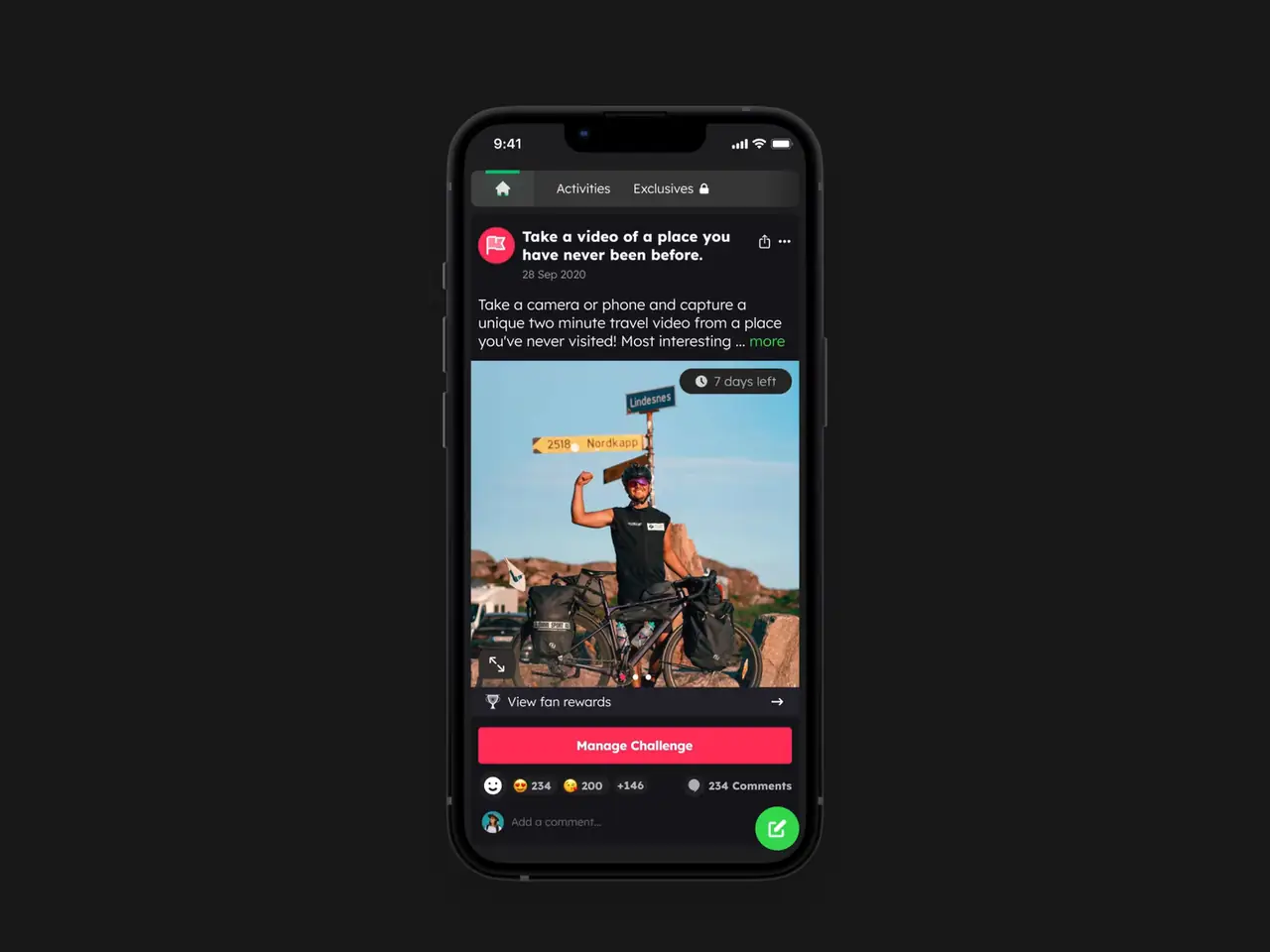
Creators can launch personalised challenges to interact closely with their super fans and reward them for participating.


- Product Design
- Backstage
- Completed in 2 months
- www.backstage.army
Overview
Building the super app for creators to manage their super fans.
Backstage is an exclusive app for creators to connect deeply with their audience, monetize their content, and grow their creative business. The company raised $2M in seed funding from Accel, OnDeck, and PointOne Capital.
In this project, I worked on “Challenge” feature that enables creators to interact with a select group of their top fans by launching personalised challenges, and reward them for participating.
- Lead Designer – Research, Interaction Design, Prototyping, QA Testing, Project Management
- 2 Co-founders, 1 Product Manager, 3 Developers, 1 QA Engineer
- 2 Months, Feature is live on the product
Impact Metrics
The product grew from 0 to 100k users with a total of 50k+ challenges launched to date.
Total Users
Challenges Launched
Engagement Time Increase
Demo
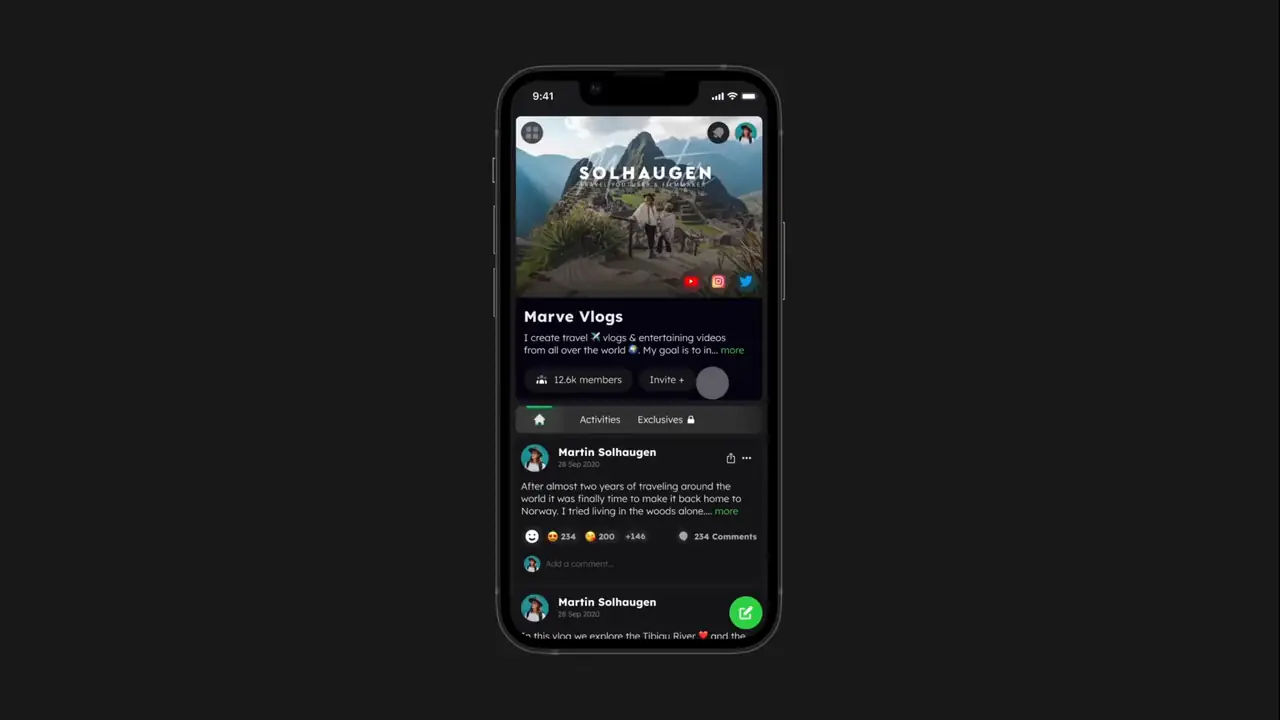
A short glimpse of the challenge creation and participation in the Backstage app.
Problem Space
Creators find it hard to host challenges & give fans an interactive experience, and reward them for participating.
Using existing tools, creators find it hard to provide interactive experiences for their fans. After speaking to a set of creators, we realised that they want to host fun and interesting challenges within their community and also reward the fans for their participation. Some host challenges on Facebook, Discord, YouTube, etc., but want to provide their fans with a more interactive and gamified experience.
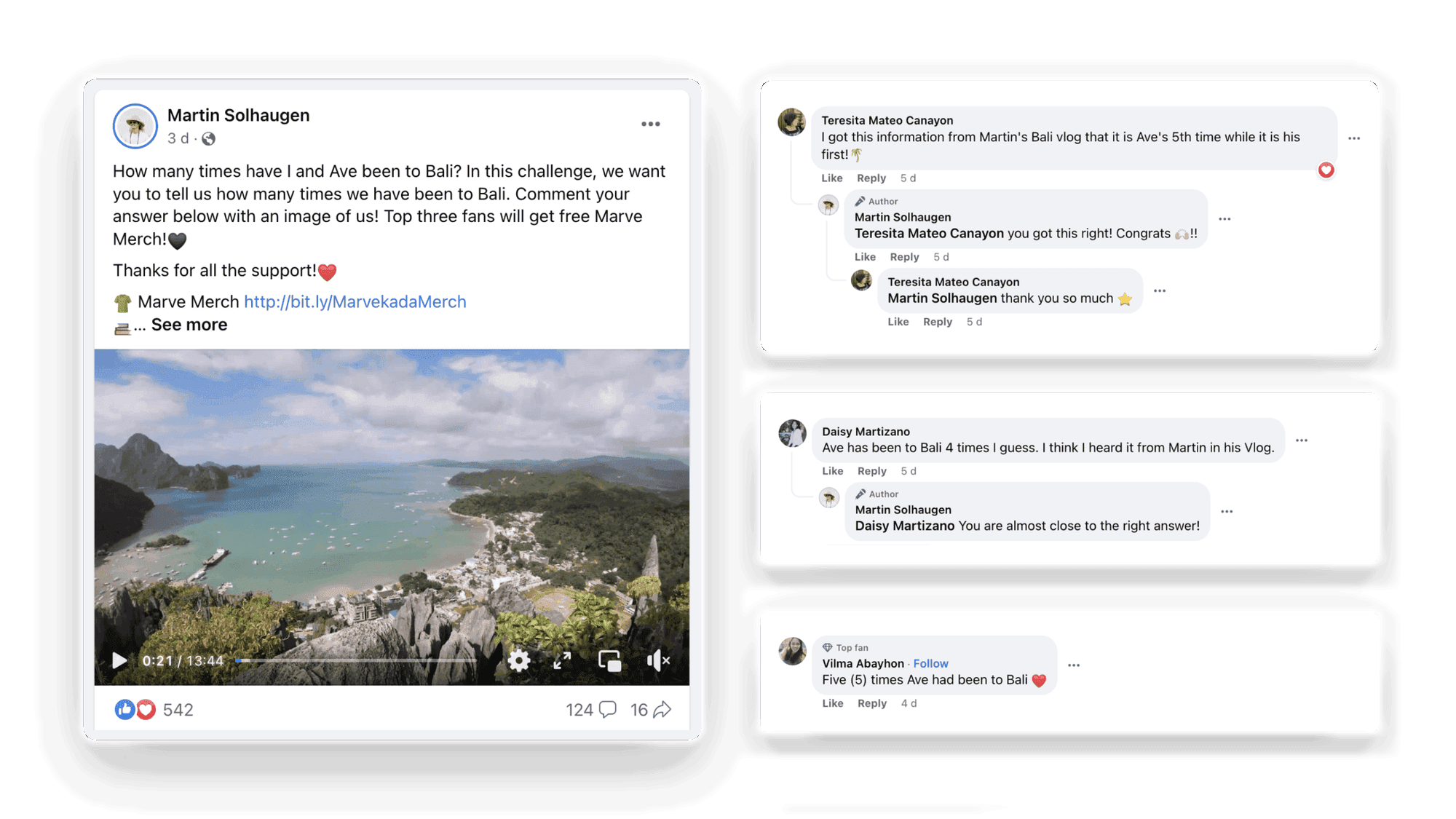
Content creators and their fans find it hard to form deeper relationships with each other. Creators want to move out of existing social platforms like Facebook, YouTube, Instagram, TikTok, etc., and start using tools like Backstage, where they can establish more meaningful relationships with their fans.
User Segment
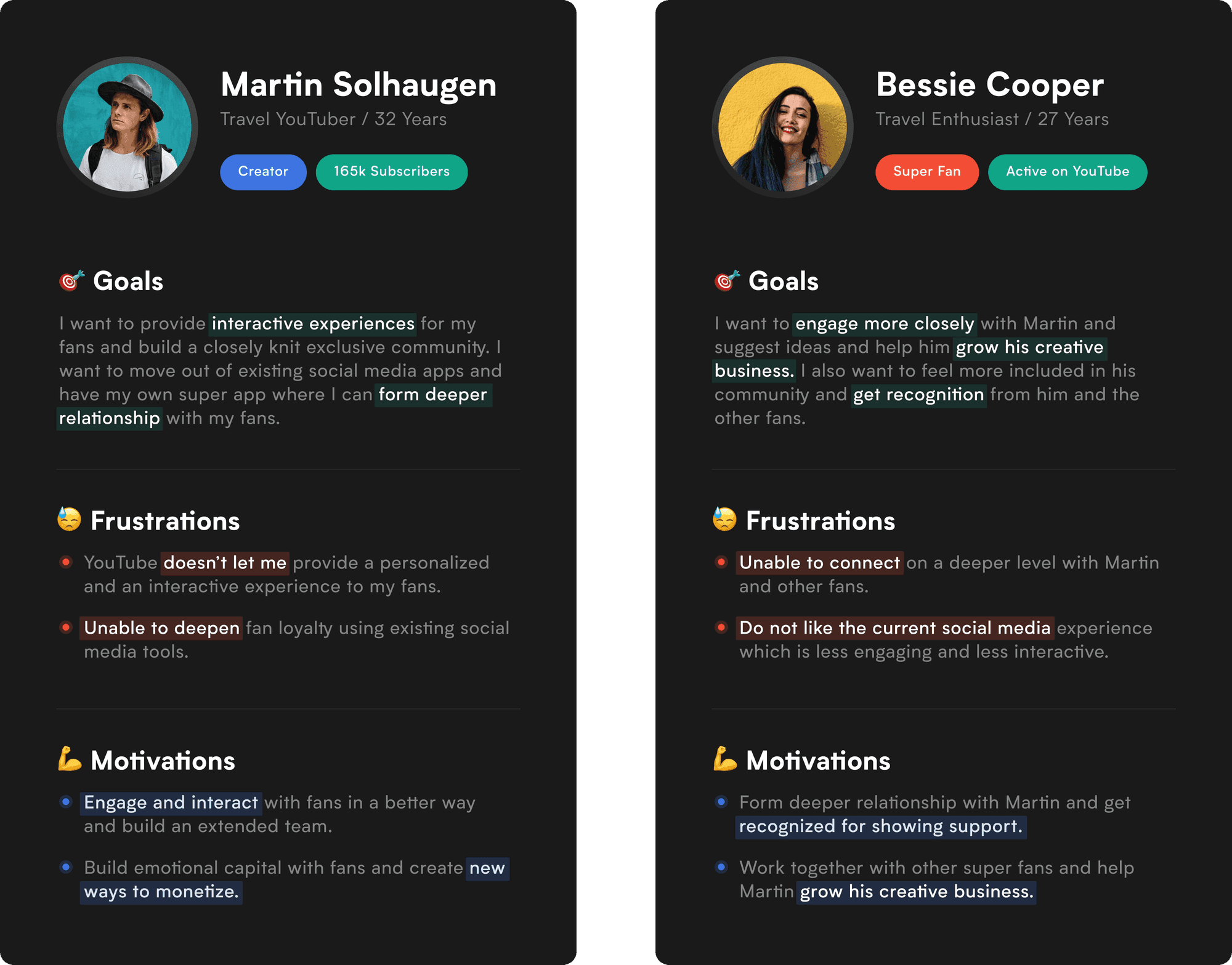
Backstage is designed to cater to both creators and their loyal fans.
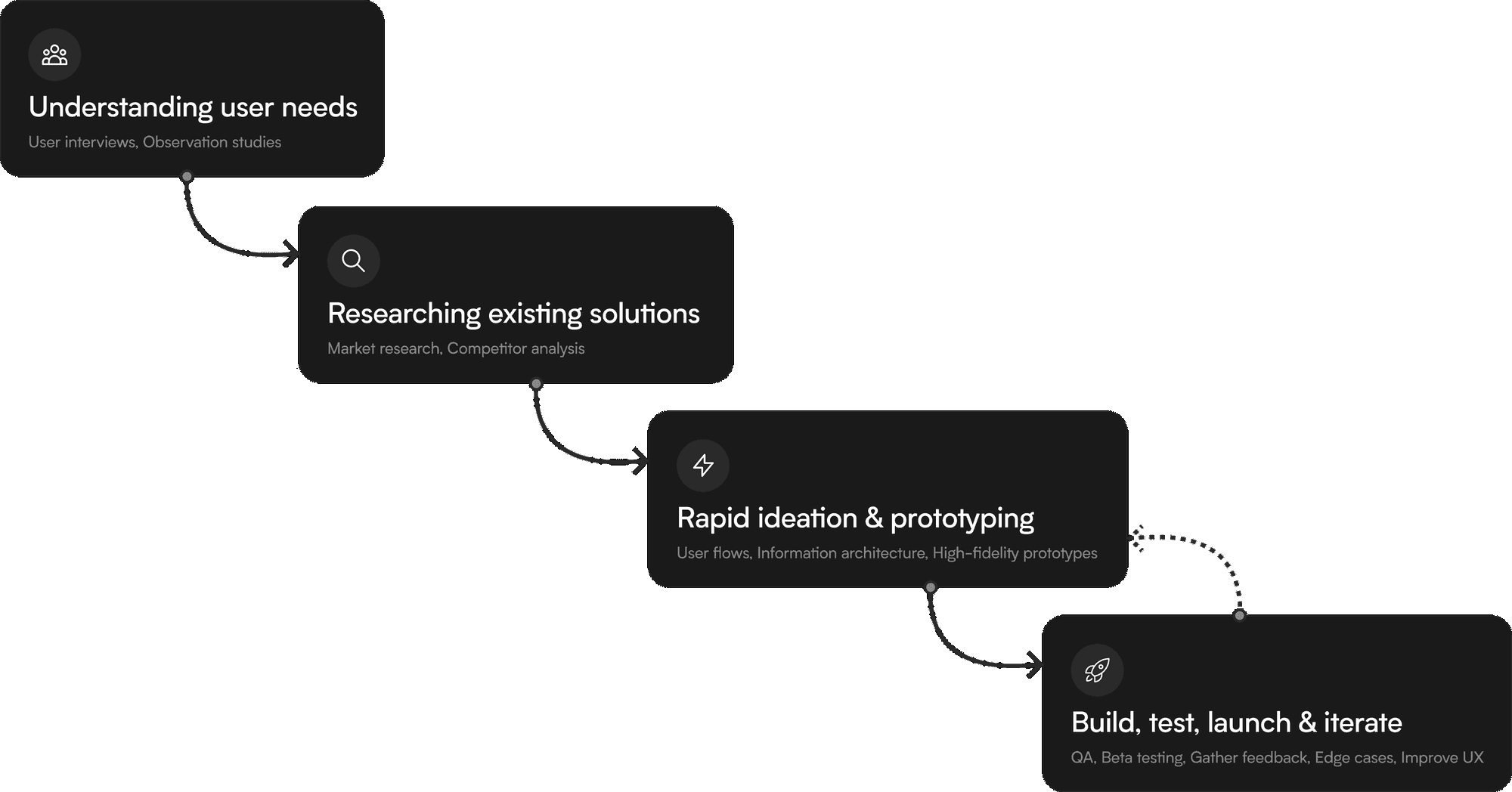
Design Process
A lean, ship fast, test and iterate approach.
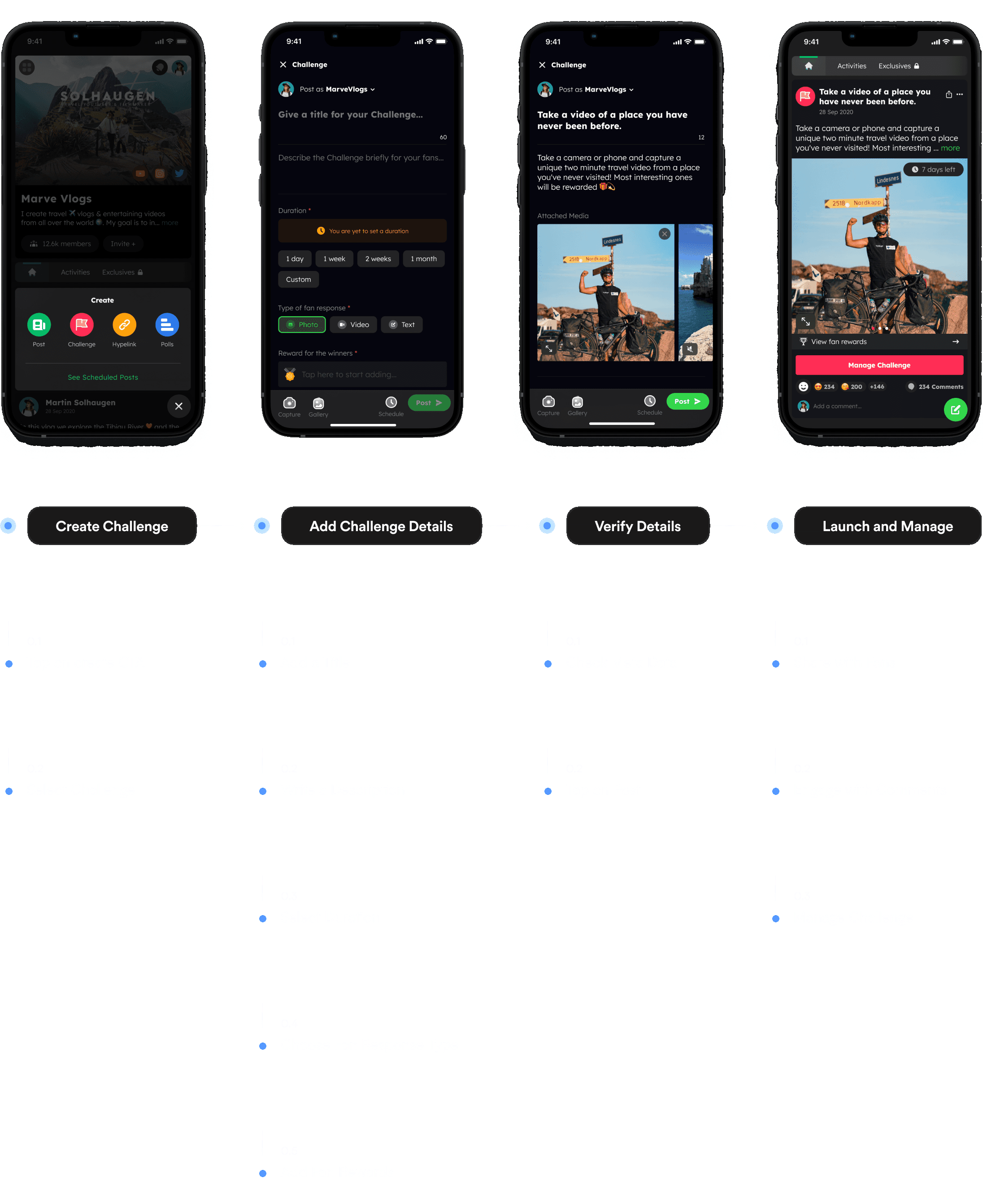
Solution: Creating a Challenge
Creators can create and launch interactive challenges in a simple, fast and intuitive way.
👉 Link to Figma Prototype for creating a Challenge (opens in a new tab)
User flow: Creating a Challenge
How does a Creator launch a new Challenge using the Backstage app?
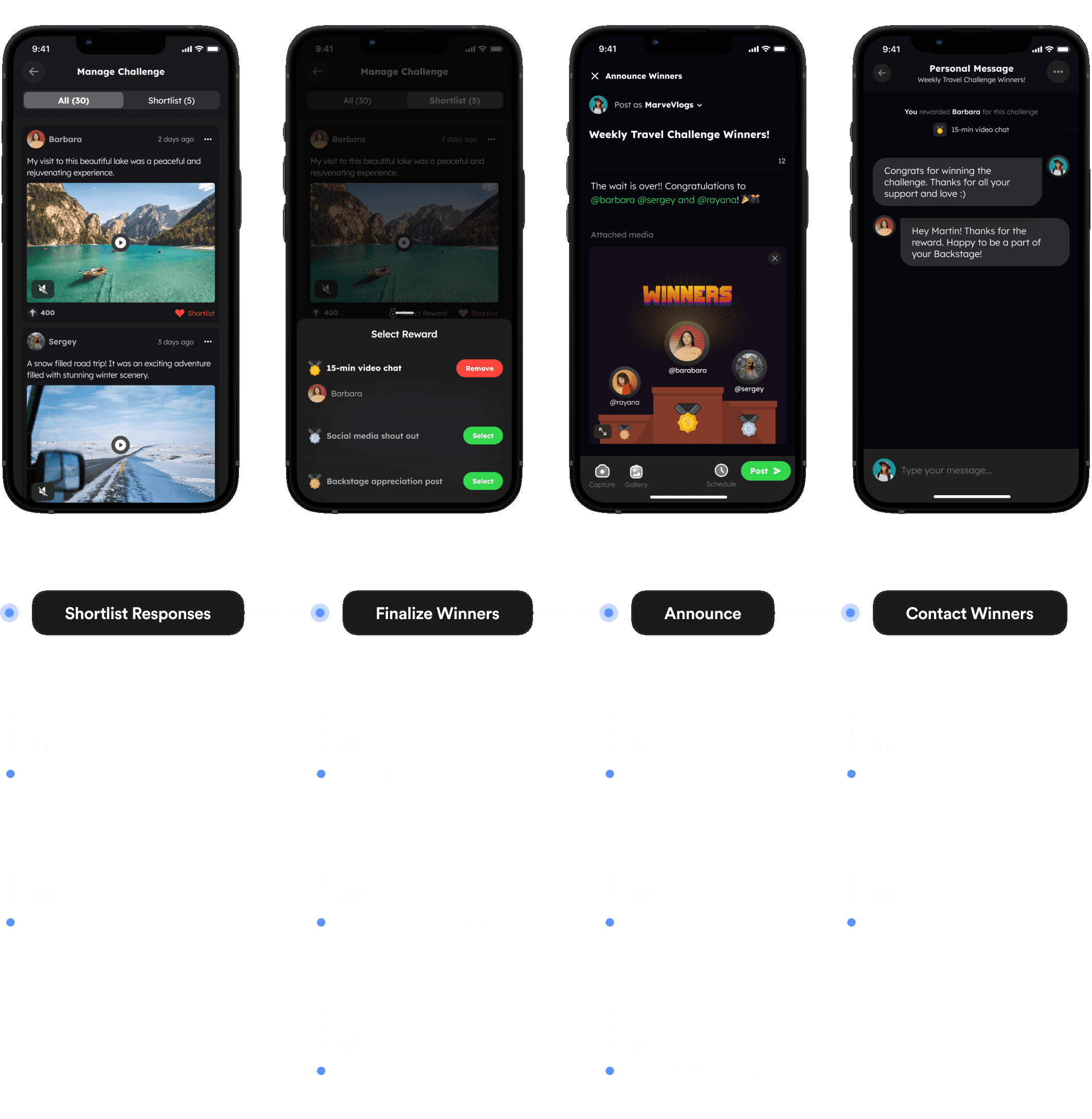
Solution: Managing a Challenge
Creators can manage challenges, view fan responses and reward fans for participating.
👉 Link to Figma Prototype for managing a Challenge (opens in a new tab)
User flow: Managing a Challenge
How does a Creator manage Challenge responses and reward winners?
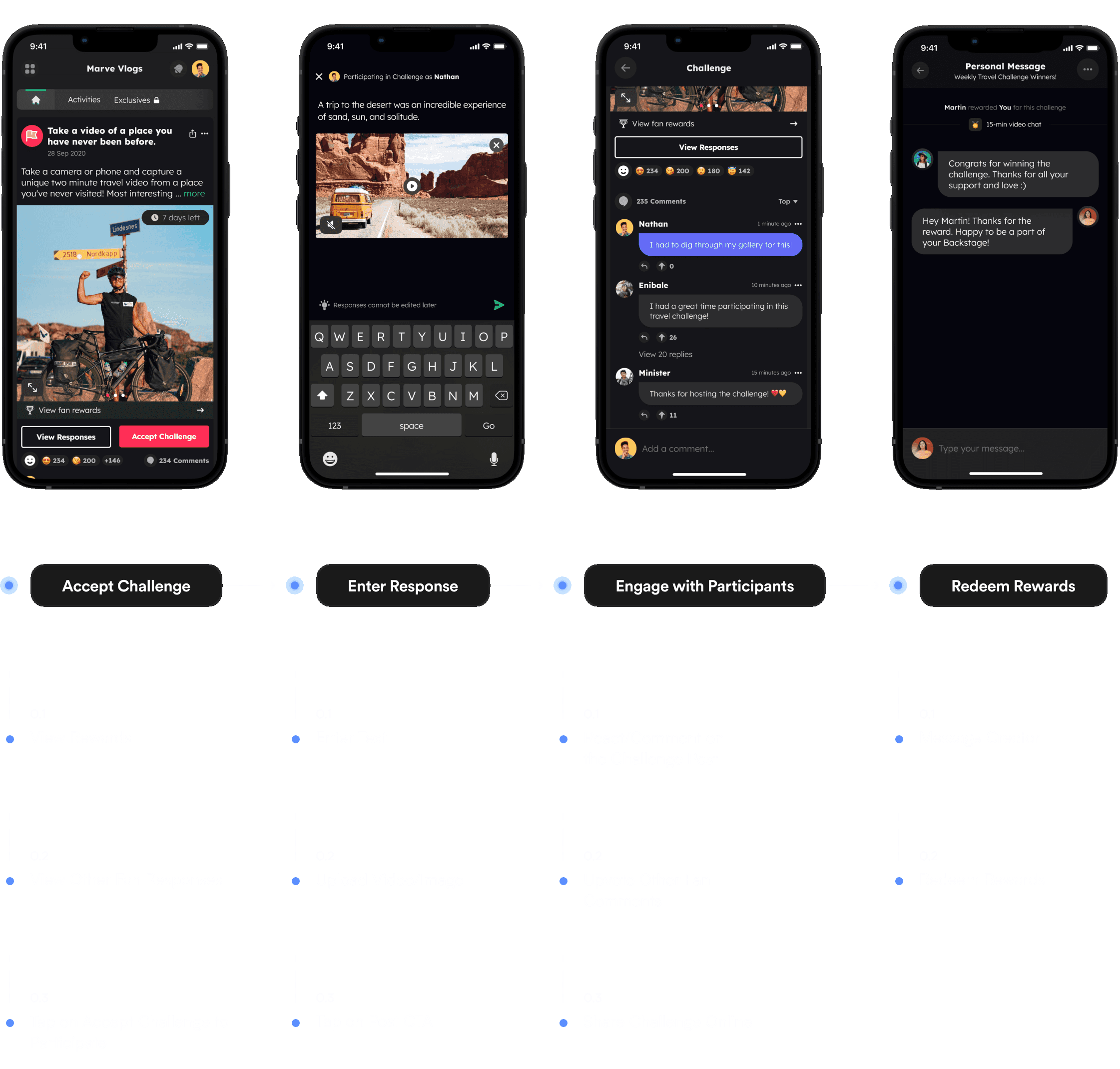
Solution: Participating in a Challenge
Fans can easily participate in challenges and win rewards for their effort.
👉 Link to Figma Prototype for participating in a Challenge (opens in a new tab)
User flow: Participating in a Challenge
How does a Fan participate in a Challenge and win rewards?
Challenges Faced
Working in a fast-paced, early-stage startup in a completely new domain was a challenging and enriching experience.
👨💻 Solo Product Designer
After the first few months, I was the sole product designer in the team, overseeing both product development and marketing efforts.
🧭 Unexplored Problem Space
Creator economy was a completely new space for me, and I had little understanding of the user segment.
🙋♂️ Different User Segments
I had to constantly switch context and design, considering that creators and their fans would have a different experience while using the product.
❗ Feature Creep
Because we were operating in a “ship fast and iterate” mindset with limited user understanding, I had to say no to many feature additions and enhancements.
Learnings & Takeaways
I loved working in a resource-constrained and ship-fast environment.
🔎 Understanding the core motivation of users is crucial
Doing user interview calls with creators and their fans made me realise that what people want and what they say they want might not always be the same.
🧠 The smartest way to design is not to reinvent the wheel
When designing a product in an unexplored space, the smartest and quickest way to design is to take inspiration from existing products that work.
🙋♂️ Involving all the stakeholders at the start of the process is important
While collaborating and working in small teams, I learned the value of gathering ideas and input from every team member right at the outset of the design process.
❗ A good relationship with the PM & developers makes life easier
Learning to speak the language of PM and developers and making adjustments to work with them towards a common goal made my job as a designer less stressful.